Check Engine Light Diagnosis in Gold River & Fair Oaks
Don't ignore that warning light — our Gold River technicians use professional OBD-II scanners and live data analysis to find the real cause, not just pull a code.
Advanced Vehicle Diagnostics Beyond the Code Reader
When your check engine light comes on, the first instinct many drivers have is to head to the nearest auto parts store for a free scan. That scan retrieves a fault code — a five-character string that points toward a system, not a specific broken part. It's a starting point, not a diagnosis. At our Gold River shop, we go several layers deeper before we ever quote you a repair.
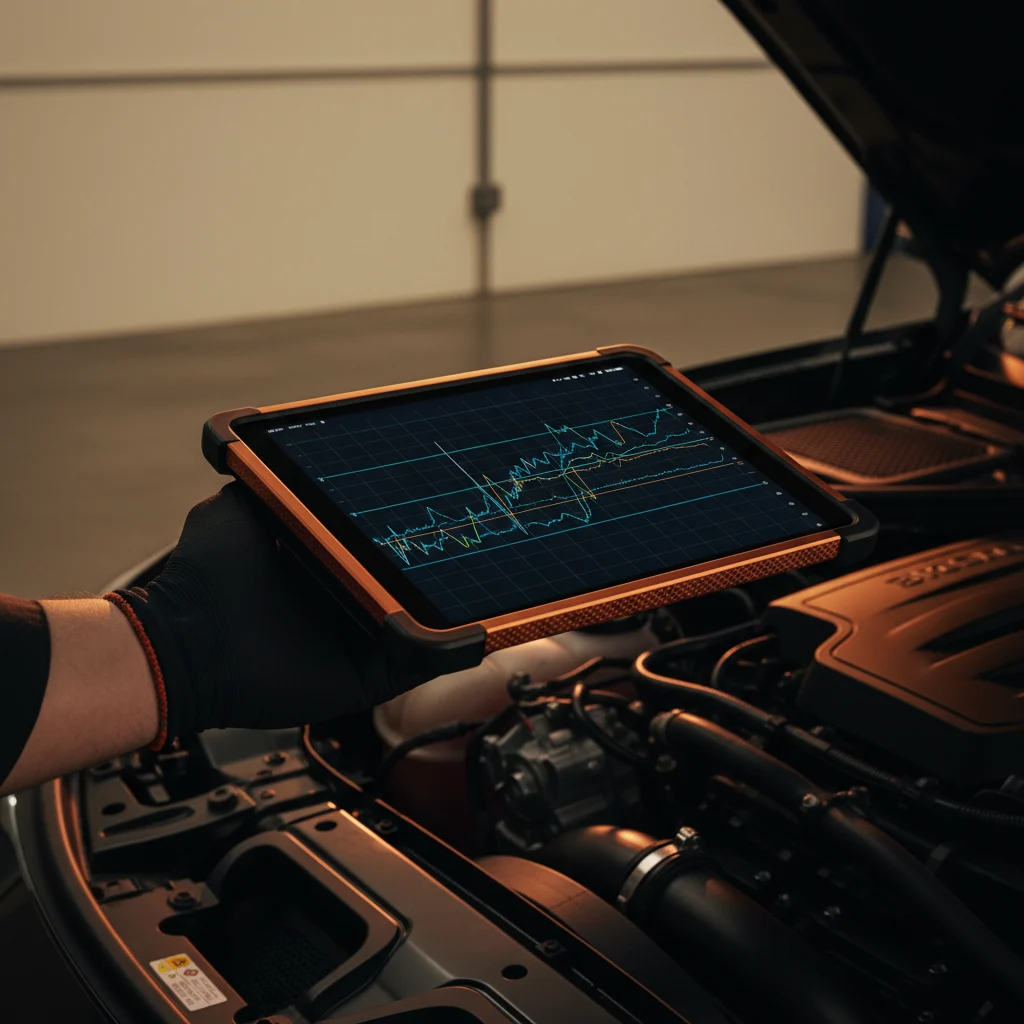
Our certified technicians connect professional-grade OBD-II scan tools — not the consumer-level readers sold at parts stores — and review not just fault codes but live sensor data streams. We monitor oxygen sensor switching rates, fuel trim percentages, MAF airflow values, and misfire counters in real time while the engine runs. That live data tells us whether a sensor is failing on its own, whether it's being contaminated by a mechanical issue upstream, or whether the ECM is reacting to a vacuum leak, wiring fault, or injector problem.
Common check engine light triggers we diagnose every week in Gold River and Fair Oaks include faulty oxygen sensors and downstream catalyst monitors, catalytic converter efficiency faults (P0420/P0430), mass airflow sensor contamination or failure, evaporative emission system leaks (EVAP — including the notorious loose gas cap), ignition misfires from worn spark plugs or coils, and EGR system faults.
OBD-II Code + Live Data Scan
Professional scanners read manufacturer-specific codes, not just generic PIDs. We capture freeze-frame data and review pending codes your parts-store scan misses.
Pinpoint Component Testing
We test the actual sensor, circuit, and actuator — not just the code. That means checking wiring resistance, voltage drop, and reference signals before condemning any part.
European & Import Expertise
BMW, Mercedes-Benz, Audi, and Volkswagen use proprietary fault codes beyond generic OBD-II. Our bi-directional scan tools access manufacturer-level diagnostics for accurate diagnosis.
Written Diagnosis Report
You receive a clear, plain-English explanation of what triggered the light, what the root cause is, and exactly what repair is recommended — before you authorize any work.
What to Expect at Your Diagnostic Appointment
Most drivers come to us having already been to an auto parts store, or having spent time searching fault codes online and ending up more confused than when they started. Here's exactly how we handle a check engine light appointment from the moment you pull in, so there are no surprises.
When you arrive at our Gold River shop, a service advisor walks the vehicle with you and collects the history: when the light came on, any changes in performance, recent repairs, and mileage. That context matters — an O2 sensor code on a 14-year-old Honda with 180,000 miles deserves different prioritization than the same code on a two-year-old BMW under extended warranty.
- 1
Vehicle intake & history review
We note symptom onset, driving patterns, and any recent work. Intermittent faults are often triggered by specific conditions — this intake prevents guesswork.
- 2
Full OBD-II scan — codes, freeze frames & pending faults
Our professional scanner reads stored DTCs, pending codes, and freeze-frame snapshots. We also review readiness monitor status to flag any California smog implications immediately.
- 3
Live data analysis while running
We monitor real-time sensor values — O2 switching, fuel trims, MAF flow, coolant temp — to isolate whether a sensor is truly failing or responding to an upstream mechanical fault.
- 4
Pinpoint component testing
We test the wiring harness, reference voltages, and actuator responses for the flagged systems. This step is what separates a real diagnosis from a code-and-guess.
- 5
Written repair recommendation — before you authorize anything
You receive a clear summary of the root cause, the recommended repair, the estimated cost, and what happens if the repair is deferred. No pressure, no surprises.
Most appointments are completed in 1–2 hours. For drivers in Fair Oaks, Folsom, Carmichael, and Citrus Heights, we're a short drive from I-50 and serve the entire eastern Sacramento corridor. Call ahead and we'll do our best to get you in the same day.
The Cost of Ignoring Your Check Engine Light
A steady check engine light can mean a $12 gas cap or a $1,200 catalytic converter — and waiting to find out which one will often turn the $12 problem into the $1,200 one. The longer an engine runs with an unresolved fault, the greater the risk of secondary damage that dwarfs the original repair cost.
One of the most common escalation paths we see in our Gold River shop: a misfiring cylinder (often a failed ignition coil or fouled spark plug) goes unaddressed. Raw fuel passes through the cylinder into the exhaust, where it ignites inside the catalytic converter. Within weeks, the catalyst is thermally damaged and must be replaced — a repair that costs $900–$1,800 depending on make and model. The original misfire repair would have cost $150–$300.
Fuel economy takes an immediate hit when the engine management system detects a fault. The ECM often enters a "limp mode" or defaults to rich fueling to protect the engine, costing you 10–20% at the pump on every tank. Over months of delayed diagnosis, that adds up to hundreds of dollars in wasted fuel.
California emissions testing is a hard stop for any vehicle with an active check engine light. It doesn't matter whether your repair is complete if the ECM hasn't run its readiness monitors — the vehicle will fail smog. Our technicians verify all readiness flags are set before you leave, ensuring your vehicle will pass its next California smog check.
Common Escalation Paths We See Every Week
-
Misfire → Catalytic failure: Unburned fuel destroys the catalyst. A $200 coil repair becomes a $1,400 catalyst replacement.
-
Oxygen sensor lag → ECM fuel map corruption: Long-term fuel trim damage from a faulty O2 sensor can affect injector long-term adaptive values.
-
EVAP leak → Smog failure: California's enhanced smog test checks EVAP system integrity. Even a minor leak causes an automatic fail.
-
Flashing light = emergency: A blinking check engine light signals an active misfire severe enough to damage the catalytic converter in minutes. Pull over safely and call us immediately.
What Gold River & Fair Oaks Drivers Say
Real reviews from local customers who trusted us with their check engine light.
"Great price. I will definitely keep coming back for all of my mechanic needs. The owner is honest, kind, and knowledgeable."

Mac Cronin
Recent
"Reasonable price. They were really friendly and really patient regarding my engine troubles. They gave me a quote and helped me find a way to pay. They are the best."

Nichole Rubes
Recent
"I had a great experience at this auto repair shop. They replaced the battery in my BMW quickly and professionally."

Galina Gappoev
Recent
"Great price. The owner and crew were very helpful and hospitable. Went above and beyond. Really affordable prices."

Aleksey Kaznacheyev
Recent
"Reasonable price. They were able to get me in same day and look at my brakes for no charge. They explained clearly what was wrong."

Alex Beskeen
Recent
"Mr. Warren gives 916 Auto raving reviews for their professionalism."

Dr. Roxanne Sanders
Recent
Check Engine Light Questions, Answered
Common questions from Gold River and Fair Oaks drivers before their diagnostic appointment.
1What is the check engine light diagnostic process?
We start by connecting a professional bi-directional OBD-II scanner to retrieve all stored and pending fault codes, then capture freeze-frame data showing the exact conditions when the fault was set. From there we review live data streams — oxygen sensor switching rates, fuel trims, MAF values — while the engine runs. Finally, we perform hands-on component testing: checking wiring resistance, actuator response, and reference voltages. You get a written explanation of the root cause before we quote any repair.
2How much does a check engine light diagnosis cost in Gold River?
Diagnostic fees at our Gold River shop typically range from $120–$180 depending on the vehicle and complexity. That fee covers a full professional scan plus our technician's time performing pinpoint component tests — not just a free code pull. In most cases the diagnostic fee is credited toward your final repair bill, so you're not paying twice.
3Is it safe to drive with the check engine light on?
A steady check engine light means drive to a shop within a day or two — don't ignore it, but there's usually no immediate danger. A flashing or blinking check engine light is different: it signals an active misfire severe enough to damage your catalytic converter within minutes of continued driving. Pull over safely, turn off the engine, and call us immediately.
4Can a loose gas cap cause the light to come on?
Yes — a missing or loose gas cap creates a leak in the EVAP (evaporative emission) system, which the ECM monitors constantly. It's one of the most common check engine triggers we see in the Sacramento area. Tightening or replacing the cap and clearing the code resolves it, but you'll want to confirm the EVAP readiness monitor has reset before your next California smog check.
5Will my car pass emissions with the check engine light on?
No. Any active check engine light is an automatic failure under California's smog inspection program — the inspector doesn't even need to run the tailpipe test. Beyond the light itself, all OBD-II readiness monitors must show 'Ready' before the vehicle can pass. We verify those flags are set before we return your vehicle so you don't face a second trip to the smog station.
6Do you offer free check engine light scans?
We can retrieve basic fault codes at no charge, but that's a very different service from a real diagnosis. A proper diagnosis requires a technician to analyze live data, test individual components, and identify the root cause — not just report a code number. That expert time is what the diagnostic fee covers, and it's what prevents you from replacing the wrong part.
7Can you reset the light without fixing the problem?
Technically yes, but it's not something we recommend and rarely something we'd do without explanation. Cleared codes will return once the fault condition recurs — usually within one or two drive cycles. More importantly, clearing codes resets all OBD-II readiness monitors, meaning your vehicle won't be ready for a California smog inspection for up to a week of normal driving even after the underlying issue is fixed.
8How long does a diagnostic appointment take?
Most check engine light diagnoses are completed within 1–2 hours of the vehicle entering the bay. Complex electrical or intermittent faults can take longer — we'll let you know up front if your situation looks like it will require extended testing. We're conveniently located to serve Gold River, Fair Oaks, Folsom, and Carmichael drivers, and we're happy to arrange a shuttle or loaner if you need to leave the vehicle.
Still have questions?
We're here to help you find the answers.
Ready to Find Out What That Light Means?
Our Gold River technicians provide a complete OBD-II scan, live data analysis, and a written repair recommendation — typically completed in 1–2 hours.