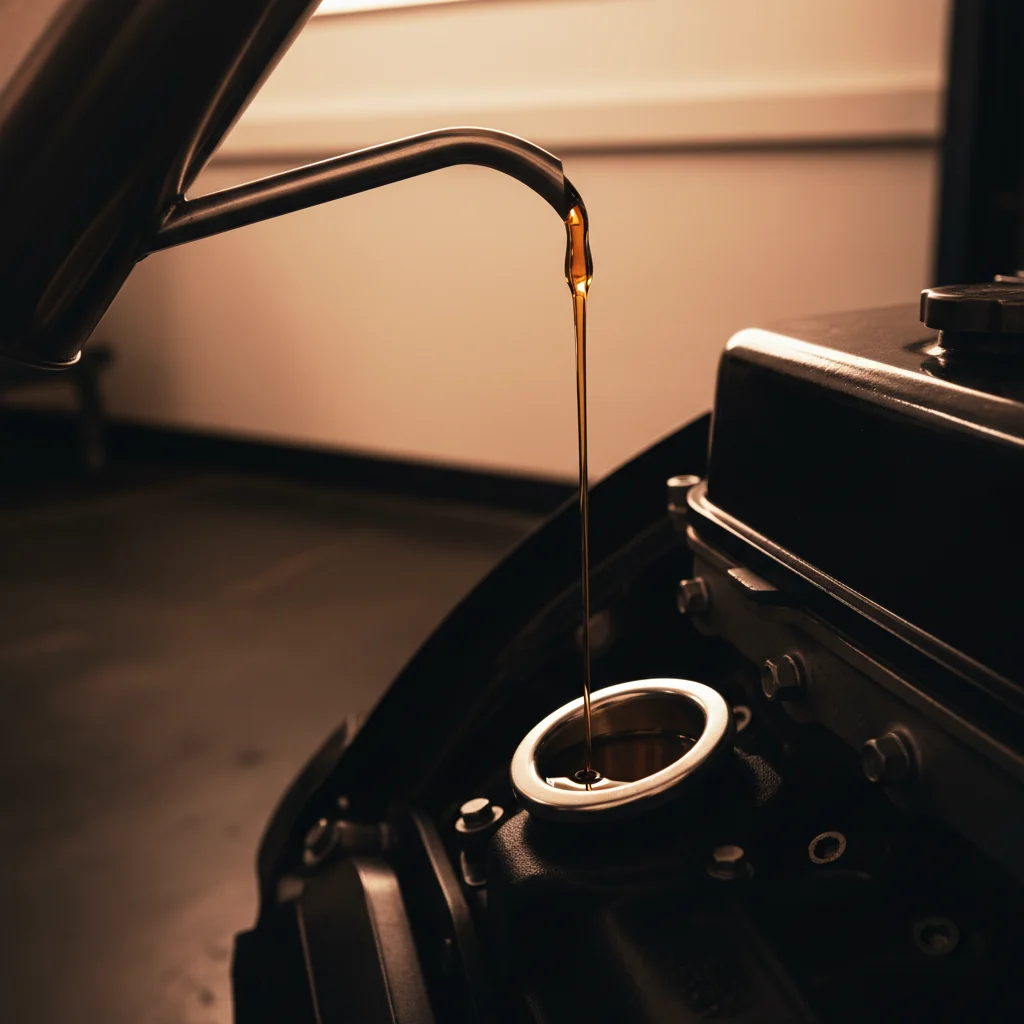
Why Full Synthetic Oil Is the Standard for Modern Engines
Conventional oil degrades quickly under the extreme temperature swings common in the Sacramento Valley — sub-40°F winter mornings and 105°F summer afternoons demand a lubricant engineered to perform across that entire range. Full synthetic oil maintains a stable viscosity film whether your engine is cold-starting on a January commute to Rancho Cordova or idling in rush-hour heat on Highway 50. That consistency translates directly into less metal-on-metal wear, fewer deposits on cam lobes and piston rings, and a measurably longer engine lifespan.
At 916 Auto Repair, every synthetic oil change begins with a drain-and-inspect protocol that most drive-through lube shops skip. We pull the drain plug, verify the crush washer seats properly, inspect the oil we drained for metal particulate or coolant contamination, then torque the plug to spec. That 90-second inspection has caught failing rod bearings, early head-gasket seepage, and worn piston rings — problems a customer would never discover until the engine threw a code or seized entirely.
Whether you drive a turbocharged European sedan that requires BMW Longlife LL-01 fluid, a modern half-ton like the Ford Ranger with its tucked-away filter housing, or a high-mileage domestic that benefits from a high-viscosity full-synthetic blend, our technicians have the product knowledge and tooling to service it correctly — the first time.
Certified Synthetic Oil Service for Performance Vehicles
Not all synthetic oils are interchangeable. A BMW 3-Series needs an oil bearing the LL-04 approval; a Volkswagen TDI requires VW 507.00 spec fluid; a Ford EcoBoost calls for a 5W-30 that meets Ford WSS-M2C946-B1. Using the wrong oil — even a premium synthetic — can void your powertrain warranty, accelerate timing chain wear, or clog the diesel particulate filter. Our service advisors look up the exact OEM specification for your vehicle before we pour a single quart.
Usage of high-viscosity, manufacturer-approved synthetic oils (Mobil 1, Castrol Edge, Liqui Moly).
OEM or premium filter replacements to ensure maximum engine protection.
Detailed inspection of the 2019 Ford Ranger oil filter location and other specific modern vehicle layouts.
Drain plug washer replacement and torque verification to prevent leaks.
The 2019 Ford Ranger is a good example of why vehicle-specific knowledge matters. The 2.3L EcoBoost's oil filter housing sits behind the driver-side front wheel well, concealed by a plastic splash shield. Technicians who don't know the layout often apply excessive torque when reaching blind — cracking the plastic housing cap or cross-threading the drain plug. Our team services Ranger models regularly and uses the correct 27mm cap-filter socket to pull the filter without the contamination risks that come from awkward improvised access.
Every service uses Mobil 1, Castrol Edge, Liqui Moly, or Valvoline — whichever your manufacturer specifies. We do not substitute house-brand synthetics. Filter selection follows the same logic: OEM or OEM-equivalent (Wix, Mahle, Mann) based on your vehicle's filtration requirements. Cheap filters with insufficient bypass valve calibration can starve your engine of oil at cold startup, which is when most bearing wear occurs.
The 916 Multi-Point Inspection Advantage
A synthetic oil change at 916 Auto Repair is never just a fluid swap. Every vehicle gets a systematic multipoint inspection built into the service — not as an upsell trigger, but as a genuine safety net. Sacramento summers are hard on rubber, belts, and coolant systems. Our inspection catches deterioration before it becomes a roadside failure on I-80 or Highway 50.
Complimentary multipoint inspection with every oil change.
Brake pad thickness and rotor condition assessment.
Belt and hose integrity verification for Sacramento summer heat durability.
Digital inspection reports sent directly to your phone.
The inspection covers brake pad thickness and rotor condition — we measure with a micrometer, not a visual glance. We check belt tension and surface condition: serpentine belts in Sacramento's heat develop glaze cracking that isn't visible without hands-on flex testing. Coolant hoses are squeezed for hardness and checked at the neck clamps where collapse-cracking typically starts. Tire pressure gets corrected to placard spec, not the number printed on the sidewall.
Inspection results arrive on your phone as a digital report with photographs before you leave the lot. You see exactly what the technician saw. If something needs attention soon, it's flagged amber. If it's urgent, it's flagged red with a clear explanation — no pressure, no jargon. You decide what to authorize.
This matters most for Gold River and Rancho Cordova drivers who commute long distances. A belt that looks fine at 60,000 miles may be weeks from snapping by 75,000. Finding it during a scheduled oil change costs nothing; replacing it as a roadside emergency costs $400 and a tow. The inspection isn't overhead — it's the highest-value five minutes of the visit.
Choosing the Right Oil for Your Vehicle in Gold River
The Sacramento region's climate creates an unusual service environment. Vehicles that sit outdoors overnight face cold-start conditions that stress oil viscosity, then spend hours of daily commute in stop-and-go heat that pushes oil temperatures toward the 250–280°F range. Here's how common oil types hold up in that environment:
Full Synthetic
Engineered molecule chains provide consistent viscosity from cold start through sustained heat. Resists oxidation and sludge. Recommended for turbocharged, high-performance, and European vehicles. Interval: 5,000–10,000 miles depending on OEM spec.
High-Mileage Synthetic
Formulated with seal conditioners and extra detergents for engines over 75,000 miles. Reduces consumption from worn valve seals. Available in the same viscosity grades as standard full synthetic. Recommended for older domestic trucks and sedans still running strong.
European-Spec Synthetic
Carries ACEA and manufacturer-specific approvals (BMW LL-01/04, MB 229.5, VW 502/507). Typically a low-SAPS formulation to protect catalytic converters and DPF systems. Required — not optional — on most post-2010 European models. We stock Liqui Moly, Castrol Edge, and Mobil 1 ESP.
If you're unsure which category applies to your vehicle, our service advisors look it up before the appointment. We've caught customers who were routinely running the wrong viscosity — sometimes for years — simply because a previous shop defaulted to a standard 5W-30 without checking OEM requirements. In most cases a single correct oil change and filter replacement is all that's needed to reset proper protection.
What to Expect During Your Visit
Vehicle Check-In
Odometer recorded, VIN verified, OEM oil spec confirmed. Takes under two minutes. No paperwork surprises.
Drain & Inspect
Old oil drained and visually assessed for contamination indicators. Crush washer replaced, drain plug torqued to spec.
Filter Replacement
OEM or OEM-equivalent filter installed using proper tooling for your vehicle's layout. Housing cap threads inspected before torque.
Fill & Verify
Correct volume of spec-approved synthetic oil filled. Engine run-cycle completed, oil pressure confirmed, dipstick level verified, reset service interval indicator.
Multipoint Inspection
Brakes, belts, hoses, tires, lights, and fluids assessed. Digital report with photos sent to your phone before you check out.
Review & Depart
Service advisor walks through inspection findings. You authorize any additional work — or don't. No pressure. Typical total time: 45–60 minutes.
Related Preventative Maintenance Services
Oil changes are the foundation of a preventative maintenance schedule, but they work best when paired with fluid exchanges and scheduled service intervals that address the full drivetrain. At 916 Auto Repair, we can bundle your oil service with:


